Alysio de Mattos
bowmaker
Biography
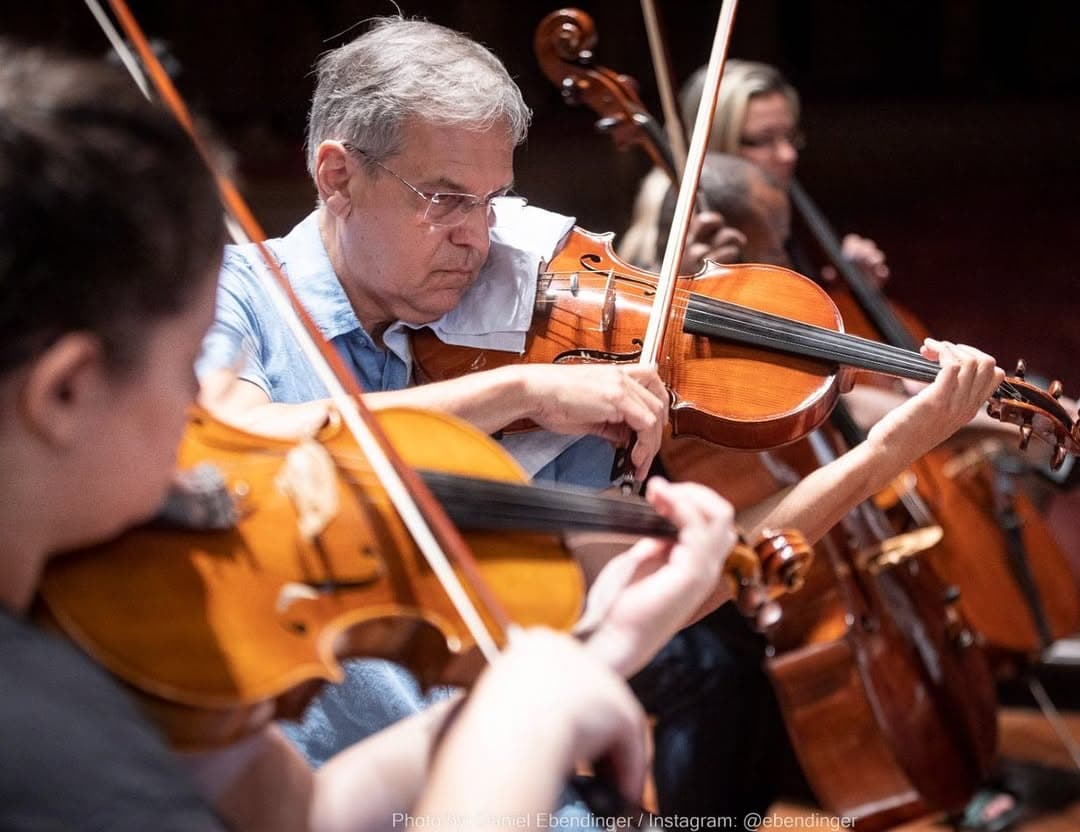
I was born in Belo Horizonte, Brazil, in 1954. I began my musical studies with my father, José Martins de Mattos, a well-known violin teacher and performer. After concluding my Bachelor's Degree in Violin Performance from Fundação Universidade Mineira de Artes, in 1980, I spent two years in Paris, where I studied violin and chamber music with Marie-Louise and Serge Hurel, at Ecole Normale de Musique.
From 1985 to 1995, I lived in the United States, first as a student and later, as a professional musician. My academic accomplishments there include: “Master of Arts” in violin performance, under Leopold La Fosse, at The University of Iowa; “Master of Music” in viola performance, under Pamela Ryan; and “Doctor of Music” in violin performance, under Elliot Chapo, at Florida State University. As a professional violinist and violist, I played in several symphony orchestras and chamber ensembles both in the United States and in Brazil.
As a viola teacher, I worked for four years as an Assistant Professor, at Valdosta State University, in the State of Georgia. In 1995, I returned to my native country, and since 1996, I have been an Associate Professor of Viola, at the School of Music of Universidade Federal do Rio de Janeiro.
In 1999, I began a research project on contemporary bows, especially French, for the Graduate Department of Music of the Federal University of Rio de Janeiro. My research project is titled Contemporary French Bowmaking Aspects.
Bowmaking background
Although my experience repairing and restoring bows goes much further, I have been actually making bows since 2006. As a violinist and violist, I have always been attracted to violins and bows, possibly thanks to my father who was also a collector of violins and bows. As a bow maker, I've taken lessons from Richard SALAÜN and Christian BARTHE, from Paris. It's thanks to them that I learned how to make a bow in its entirety: button, frog, and stick.
Pernambuco
Since 1997 I have been getting pernambuco seedlings of two species: the most common “small leaf”, and the type known as “orange leaf”. They come from the Brazilian states of Minas Gerais, Rio de Janeiro and Bahia. In my ranch, in Saquarema — a small town in the state of Rio de Janeiro — I have two hectares of land designated for replanting pernambuco trees and other noble species of the Atlantic Forest. There, I also have an adult pernambuco tree of around 35 years old. From that tree alone I get dozens of seedlings per year. Gradually, I am expanding my plantation to other parts of the area.